This Week in AI: Shared Agent Workspaces Need Clear Ownership
Cursor, Gemini, Devin, and Factory show why teams need owners, access limits, cost controls, and human approval for parallel agent work.
 Axiom Studio November 13, 2026 5 min read
On this page
AI coding tools are moving from one person with one agent to a team with many agents. This week, Cursor added multiplayer Projects, Google released Gemini 4 Carbon for long agent work, and Factory introduced Security Factory.
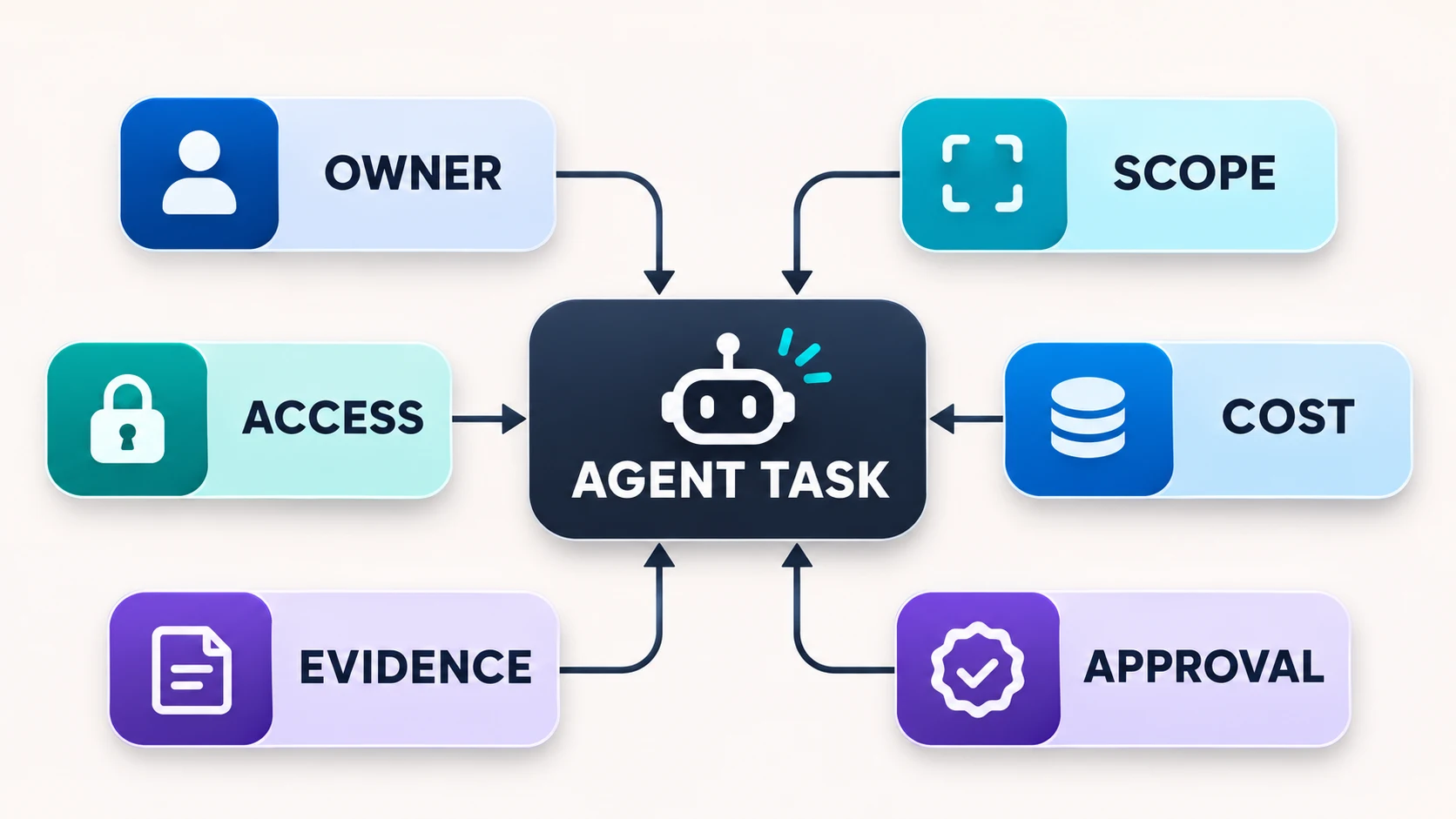
The products are different, but they point to the same team problem: more parallel work creates more ways to lose ownership. The short answer: every agent task in a shared workspace needs one human owner, a defined scope, limited access, a cost limit, an evidence trail, and a human approval step. For the wider tooling picture, see our guide to governing agentic coding tools from Cursor to Copilot.
Cursor makes the workspace shared
On November 10, 2026, Cursor announced that Projects is now multiplayer and rolling out in beta. Teammates can share context, documents, a task board, and agents in one Project. Cursor says each teammate keeps a private chat while the Project holds shared context.
That can cut repeated setup. It also raises a hard question: which person owns a task when several coordinators and agents can see the same plan?
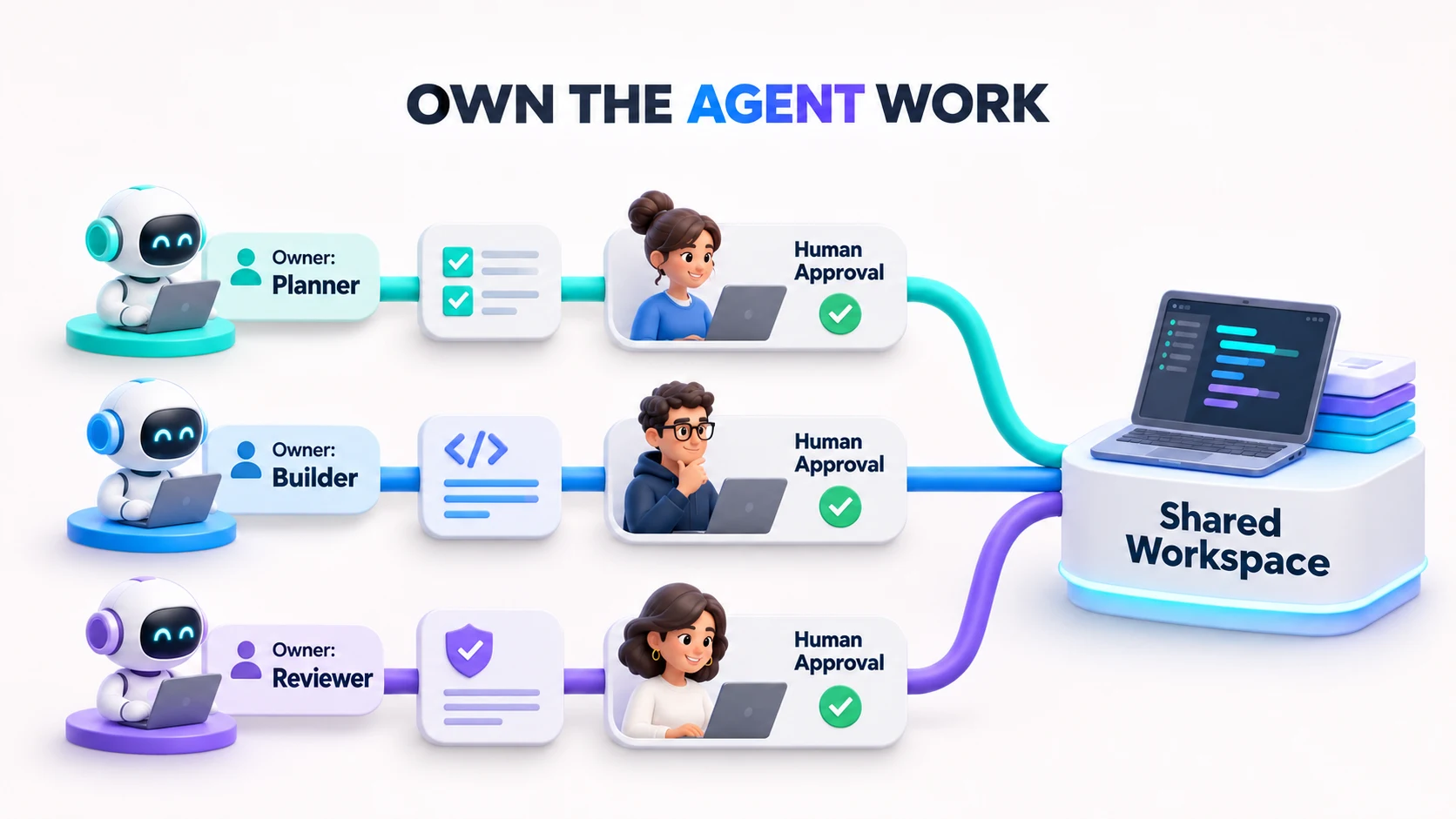
A shared board is not enough. Each task needs one human owner, one active agent path, a branch or worktree, and a clear review gate. Shared context should show decisions, but it should not hide who approved them.
Gemini 4 Carbon makes long work practical
Google made Gemini 4 Carbon available to paying developers and enterprises on November 10, 2026. Google positions Carbon for hard, multi-step coding, debugging, security, and research. It costs $2 per million input tokens and $10 per million output tokens during the introductory period.
Google also previewed /swarm in Antigravity. It can split one prompt into a team of agents across isolated workspaces, with Carbon used for deep roles such as architecture, coordination, and audit.
This changes the cost model. A team should track spend by task, model, retry, and reviewer time—not only by token price. A long run that explores dead ends may be useful, but someone must own its budget and stop rule.
Devin shows why session boundaries matter
Devin’s own Java upgrade guide runs large migrations as parallel sessions. Its environment setup guide says every session boots from the same configured image, and that without a working environment Devin can’t run tests or verify its own work. That makes the session a useful unit of ownership.
For each Devin session, record the ticket, repository, branch, environment, reviewer, and end state. Parallel sessions should not share a writable branch unless the team has a clear merge order. A model choice is only one control; the task boundary matters more.
Factory connects security signals to fixes
Factory announced Security Factory in private preview on November 10, 2026. It connects scanner signals, investigation, remediation, and verification. Workstreams can divide an investigation into parallel tasks while durable state keeps evidence and open questions.
This is a strong use case for agents, but security work needs strict access. A finding may touch source code, cloud assets, secrets, tickets, and chat history. Give each agent only the tools and credentials needed for its role. Keep human approval before a risky change or deployment.
Turn shared context into an operating contract
A shared workspace needs an operating contract that both people and agents can read. The contract should name the task owner, the code and services in scope, the allowed tools, the cost limit, the evidence required, and the person who approves the result.
Keep this contract close to the task. Do not bury it in a policy document that the runner may never read. If scope or access changes, update the task and record who approved the change. For long work, set checkpoints where the agent must post progress, cost, blockers, and the next action.
Separate “can see” from “can change.” A planning agent may read broad context but should not deploy. A coding agent may edit one worktree but should not rotate secrets. A security agent may test a finding in a sandbox but should not change production without approval. These limits make parallel work easier to review.
Six controls turn a shared agent workspace into an accountable engineering system.
The controls teams need now
Owner: Name one person who can pause the work and accept the result.
Scope: Tie each agent to a ticket, repository, branch, and allowed file or service set.
Access: Use role-based credentials. Do not copy one broad token to every agent.
Cost: Track model spend, retries, tool calls, sandbox time, and human review.
Approval: Require a person for merge, production changes, secret rotation, or security exceptions.
Evidence: Keep the plan, logs, tests, diff, and final decision together. Mark which facts were shared, which notes stayed private, and which decisions changed during the run.
A small operating model
Use a shared agent workspace as a control plane, not as a room where every agent can do everything.
- A human creates a scoped task.
- One owner assigns an agent and workspace.
- The agent works with limited access.
- A second agent may review, but it does not silently take ownership.
- Tests and evidence attach to the task.
- A human approves the final action.
- The workspace records the outcome and cost.
Teams can apply the same pattern with VibeFlow work items, execution logs, and role-based agent sessions. The VibeFlow documentation also explains how sessions claim work and preserve logs. For code review, Vera can add a separate review path before merge.
Parallel agents need a simple rule
Shared context helps agents work together. Clear ownership helps people stay accountable. Use both. If a team cannot name the owner, scope, budget, and approver for an agent task, the task is not ready to run.
Frequently Asked Questions
Why do shared AI agent workspaces need a human owner?
A human owner can pause the work, approve the result, resolve scope changes, and remain accountable when multiple agents or coordinators share one task.
What controls should teams put around parallel coding agents?
Give each task an owner, ticket, repository, branch or worktree, allowed tools, cost limit, evidence requirement, review gate, and approval path.
How should teams control agent access?
Separate what an agent can see from what it can change, use role-based credentials, and grant only the tools and data needed for the specific task and environment.
How can teams manage the cost of long agent runs?
Track spend by task, model, retry, tool call, sandbox time, and reviewer time, then give the owner a budget and a stop rule.
Where should agent work evidence live?
Keep the plan, execution logs, tests, diff, decisions, and final approval together with the task record so another person can reconstruct what happened.
Written by
Axiom Studio