AI Coding: How Enterprise Teams Ship Faster Without Losing Control
What AI coding is, where AI-generated code goes wrong, and how enterprise teams add review, audit evidence and compliance controls so it is safe to ship.
 Axiom Studio November 19, 2026 11 min read
On this page
AI coding means using generative AI to write, test, debug and document software, and in 2026 it increasingly means agents that take a ticket and open a pull request on their own. The speed is real. The risk is that output outpaces review. The teams that benefit most pair AI coding agents with independent code review, an audit trail and compliance scans, so every AI-generated change can be traced and verified. That is the approach we built Axiom Studio around: VibeFlow supplies the agents, and Vera reviews what they produce.
TL;DR
- AI coding covers completions, chat assistance and autonomous agents that plan, edit files, run tests and open pull requests.
- Developers report real gains, but 96% do not fully trust that AI-generated code is functionally correct, so review matters more as output grows.
- ENISA’s draft advisory points to four actions: identify expectations, specify them to the agent, verify outputs, and record evidence.
- Scaling across an enterprise needs governance in the pipeline: approval rules, audit trails and compliance scans, not just a licence for a coding assistant.
- VibeFlow and Vera combine the agent team, built-in project management and review in one platform.
What is AI coding?
AI-assisted coding is using generative AI tools to help write code. Beyond first-draft generation, the tools help with debugging, designing tests, refactoring and documentation, and they are increasingly built into the IDE (the editor developers work in).
It helps to separate three levels:
| Level | What it does | Who decides |
|---|---|---|
| Completion | Suggests the next lines as you type | The developer, line by line |
| Chat assistant | Answers questions, drafts functions, explains errors | The developer, per prompt |
| Agent | Plans toward a goal, edits files, runs tests, loops on feedback | The agent, within the scope you set |
An agentic tool has to plan toward a goal, act with real tools and loop on feedback. Some vendors now ship agents that clone a repository, make changes and open a draft pull request. A pull request is the proposed change a teammate reviews before it merges. For a deeper look at the agent model, see our guide to agentic coding.
How much AI coding is happening, and what it delivers
Adoption is no longer an experiment. In SonarSource’s 2026 developer survey, 72% of developers who have tried AI tools use them every day, and 42% of their code is AI-generated or assisted, up from 6% in 2023. Developers report an average 35% personal productivity boost.
Other data points in the same direction. A JetBrains survey of almost 25,000 developers, cited by William Blair, found nearly 9 in 10 save at least one hour a week and 1 in 5 saves eight hours or more.
Organization-level results vary more. Software Improvement Group’s 2026 report found reported outcomes ranging from a 19% slowdown to a 26% speed-up, with 22% of merged code AI-authored and only 29% of organizations reporting formal oversight or processes to assess it. The gap between individual gains and organizational results is mostly a process gap: what happens between “the agent wrote it” and “it is in production.”
Where AI-generated code goes wrong
AI models can produce code that passes tests but violates domain conventions or hides subtle bugs, and an agent will not flag when it is heading the wrong way. Three patterns recur.
Working is not the same as secure. ENISA’s security experts warn that functional correctness should not be confused with security: an agent optimizing for the requested task can still ship significant vulnerabilities. In SIG’s experiments, AI showed on average double the security risk violations of human projects, and only a small fraction of generated systems compiled or ran without modification. The same logic applies to other AI agents in your environment, as this piece on AI agent security risks explains.
Hallucinated references. In a study of 17 experienced developers, agents referenced classes that did not exist in the codebase. Developers compensated with diff-based review, LLM-as-a-judge checks and layered testing.
Bigger changes, slower review. LinearB’s benchmark found AI-assisted pull requests are 2.6x larger than unassisted ones, and agentic pull requests wait 5.3x longer before review begins. Larger changes reviewed later are where defects slip through.
A UBC study testing popular assistants on a realistic project concluded the tools still cannot produce fully reliable, secure code without supervision from a skilled human. Skills like requirements engineering, design, testing and code review matter more, not less.
The skills and oversight your developers need
AI coding is easy to start and hard to do responsibly. The practical skills are not prompt tricks. They are the ones the UBC researchers named: writing clear requirements, designing, testing independently and reviewing critically.
The arXiv study identified four kinds of oversight developers perform with agents:
- A priori control: limiting what the agent may touch before it starts.
- Co-planning: agreeing on the approach before code is written.
- Real-time monitoring: watching the agent’s actions as it works.
- Post hoc review: inspecting the result before merge.
Oversight is preventative as well as reactive. Your team will want each of the four written down as policy, not left to individual habit. A shared standard helps here; code review guidelines give a baseline for what reviewers check and how quickly they respond.
A control framework for enterprise AI coding
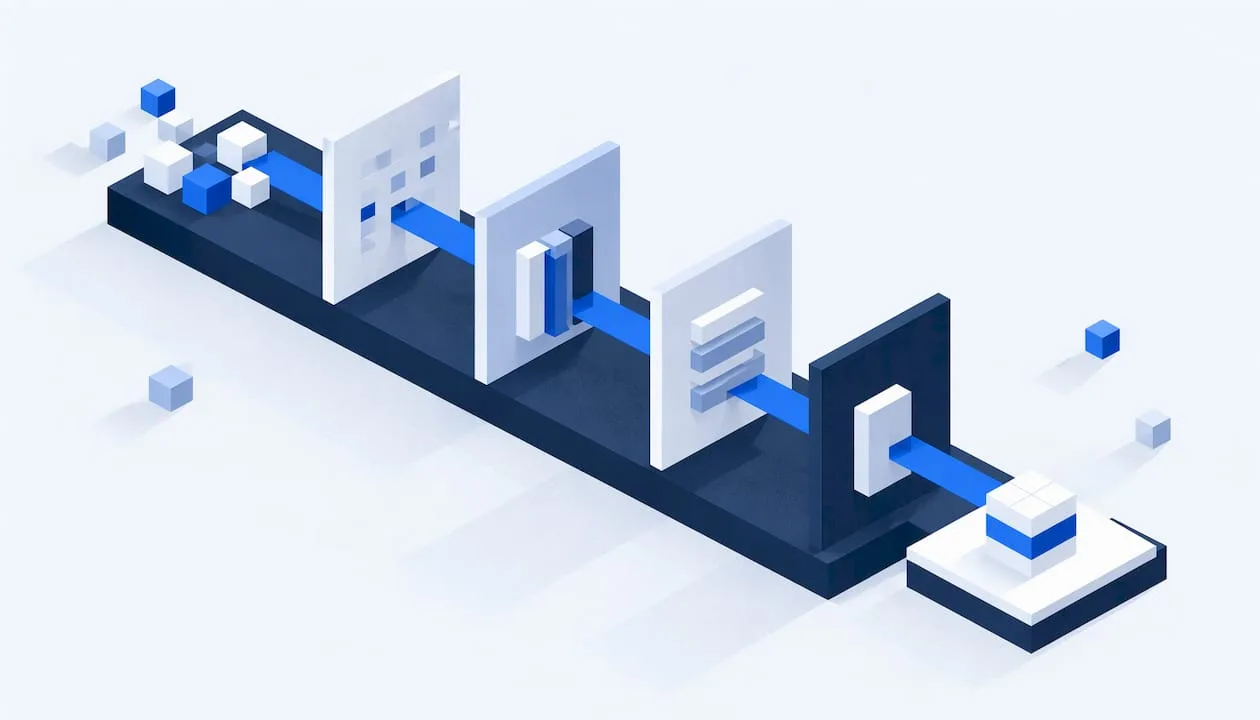
ENISA’s September 2026 draft technical advisory offers a four-action approach that maps cleanly onto an engineering workflow. Identify, specify, verify and record is the shape of it. It lists the risks to address: unclear accountability for AI-generated output, uncontrolled agent autonomy, inconsistent security instructions, weak traceability, insufficient review capacity, and unsupported claims such as “all checks passed.”
Step 1: Identify the process and the expectations
Name the lifecycle stage where the agent works (planning, implementation, testing, release) and the security and quality bar for it. Write it down per repository.
Where it goes wrong: expectations live in a wiki nobody opens. What we do: VibeFlow runs a 9-agent SDLC team across product, architecture, development, QA, security and DevOps, and tracks features, todos and issues in one dashboard, so the ticket, the agent’s work and the expectations sit in one place.
Step 2: Specify the rules for the agent
Put security instructions directly into the agent’s configuration: allowed tools, scopes, approval rules. Inconsistent instructions between teams are one of ENISA’s named risks.
Where it goes wrong: every team writes its own prompt and the standard drifts. What we do: our Unified AI Gateway centralizes tool access for agents, with credential vaulting, granular permissions and audit trails.
Step 3: Verify outputs independently
The agent that wrote the change should not be the only one that judges it. Review, approval and security checks come before merge.
Where it goes wrong: review capacity is the bottleneck, and larger AI pull requests make it worse. What we do: Vera, our code review agent, reviews code with actionable evidence and shows the commands used to verify each finding. It is free forever on all plans, with unlimited reviews and users. For how to judge any review agent, see our guide to measuring precision, recall and noise.
Step 4: Record the evidence
“All checks passed” is only credible when the record shows which checks, on which version, approved by whom.
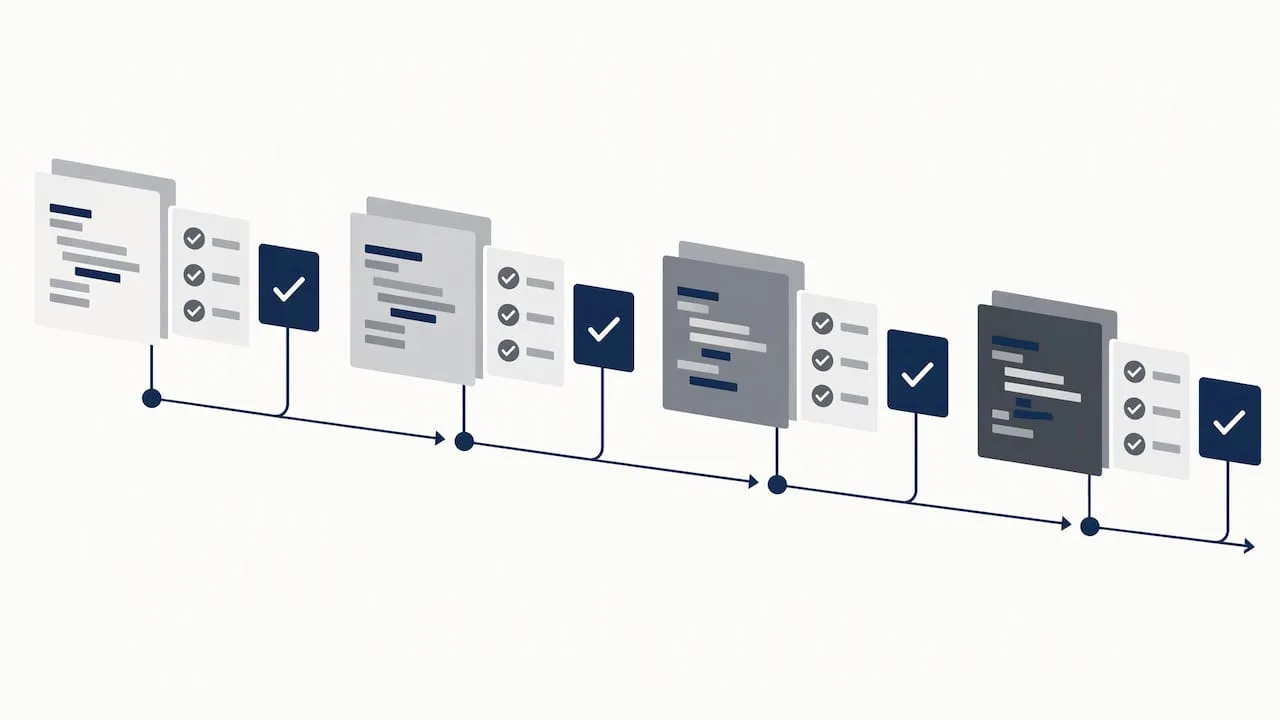
Where it goes wrong: evidence is rebuilt by hand before an audit. What we do: VibeFlow keeps an audit trail of agent work and tracks it against compliance frameworks such as SOC 2 and GDPR, so compliance teams can pull evidence from the same system engineers work in. See AI coding compliance and GRC for how that looks for audit owners.
Scaling AI development across the enterprise
Scaling is a governance question before it is a tooling question. SIG’s 2026 AI Maturity Guide lays out 20 practical steps for boards, CTOs, CISOs and GRC leaders, aligned to ISO/IEC 42001, the EU AI Act and the OWASP AI Exchange. It notes that non-compliance with AI regulation is the risk executives cite most, at 57% according to EY’s 2025 data.
Gartner’s October 2026 guidance says software engineering leaders must adopt AI engineering as a standardized practice to build, govern and operate AI-enabled systems and agents at scale. A companion guide treats AI governance, trust, risk and security management as the route to value from AI investment.
Sonatype’s playbook goes further on enforcement, calling for automated controls in DevSecOps pipelines: policy controls, continuous software composition analysis, AI artifact scanning, SBOM generation, runtime monitoring and automated remediation.
A workable enterprise rollout looks like this:
- Start with scopes. Decide which repositories and environments agents may access.
- Set approval rules by risk. Low-risk changes can merge after automated review; regulated code paths need a named human approver.
- Track cost and usage. Multi-provider LLM routing and cost tracking keep spend visible as adoption grows.
- Map controls to frameworks. Choose the framework your auditors expect. Our comparison of NIST, the EU AI Act and ISO 42001 is a starting point.
- Measure outcomes, not output. Track defects escaping to production and review wait time alongside lines generated.
Platform teams can see how this fits their stack on the VibeFlow for platform engineers page, and engineering leaders can start with VibeFlow for engineering leaders.
Choosing AI coding tools for a team
The tool category matters less than the questions you ask of it:
- Does it work in your repository and ticket workflow, or beside them?
- Can you restrict what it touches and require approval?
- Is every action logged in a form an auditor accepts?
- Does an independent reviewer check its output?
- Does one subscription cover tracker, agents, review and compliance, or do you pay for four?
For a side-by-side view, read our comparison of AI coding tools and the enterprise-focused list. For a direct comparison with a popular assistant, see VibeFlow vs GitHub Copilot.
Axiom Studio for governed AI coding
Teams adopting AI coding often end up buying a tracker, an AI reviewer and a compliance add-on. Axiom Studio replaces that with one platform: VibeFlow’s agent team and native project management, Vera’s review and audit trail, and the governance layer underneath. Plans on the pricing page are Starter (free), Pro at $20 per month, Team at $49 per seat per month with a three-seat minimum, and Enterprise, which has no published price.
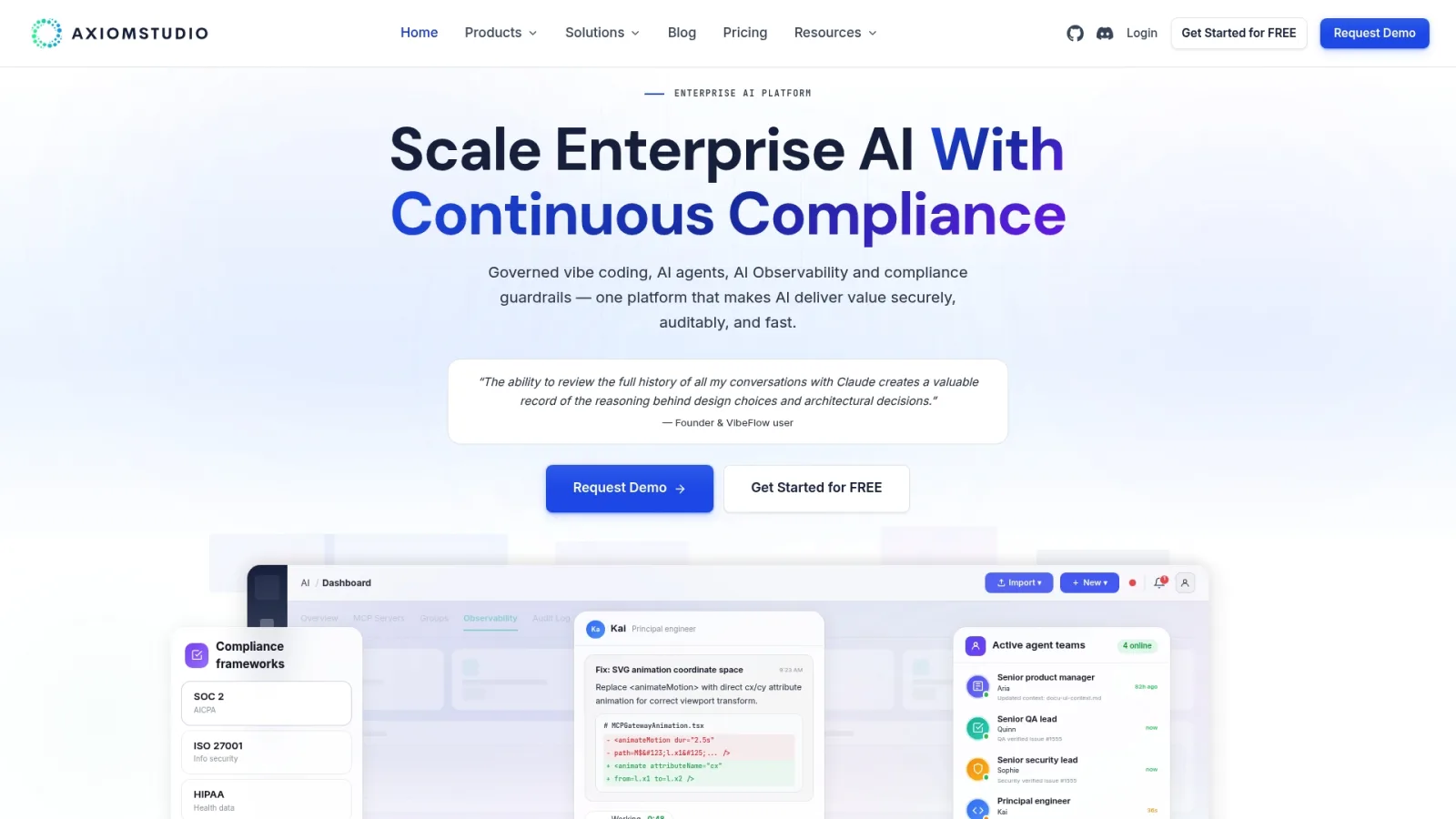
To see how it fits your delivery process, request a demo, or read about Vera AI code review.
Sources
- Introduction to AI-assisted coding, UQ Library
- Agentic AI coding tools: how they work and how to choose
- State of Code Developer Survey report, SonarSource
- Cracking the Code, William Blair
- AI boardroom gap report, Software Improvement Group
- Twelve quick tips for AI-assisted coding in science, PLOS
- ENISA Technical Advisory on AI-assisted software development
- Human oversight of agentic systems in practice, arXiv
- LinearB 2026 Software Engineering Benchmarks Report
- From Specifications to Implementation in the Gen-AI Era, UBC
- AI Maturity Guide 2026, SIG
- Journey Guide to Establishing AI Engineering, Gartner
- A Journey Guide to AI Governance, Trust, Risk and Security, Gartner
- 2026 CISO & CTO AI Governance Playbook, Sonatype
Recommended
- Top AI Coding Tools for Enterprise Teams
- VibeFlow for CTOs — AI Governance
- Agentic Coding: How AI Agents Write, Test & Ship Code Autonomously
- AI Coding Compliance and GRC with VibeFlow
Frequently Asked Questions
What exactly is AI coding?
It is the use of generative AI to write and improve code. That includes generating functions, debugging, writing tests, refactoring and documenting. At the most advanced end, agents plan work, edit files, run tests and open pull requests with limited human input.
How difficult is AI coding?
Starting is easy; doing it safely is the skill. A University of British Columbia study found developers must test independently and review critically, because models can produce code that passes tests yet breaks conventions or hides bugs. Requirements, design, testing and review skills matter more as agents write more code.
Can AI coding make $1,000 a day?
No source we reviewed supports a figure like that. Measured productivity results vary widely, from a 19% slowdown to a 26% speed-up at the organization level in one report, and developers self-report an average 35% personal boost in another. Value comes from shipping reliable software faster, not from a fixed daily number.
How do enterprises scale AI software development safely?
By putting governance into the pipeline: defined scopes, approval rules, independent review, audit trails and scans mapped to the frameworks your auditors use. ENISA's identify, specify, verify and record approach is a practical template.
What are the main risks of AI-generated code?
Three recur: code that works but is not secure, hallucinated references such as classes that do not exist in the codebase, and larger pull requests that wait longer for review. SIG found AI projects averaged double the security risk violations of human projects, and LinearB found AI-assisted pull requests are 2.6x larger than unassisted ones.
How do VibeFlow and Vera support governed AI coding?
VibeFlow runs a 9-agent SDLC team with built-in project management and an audit trail tracked against frameworks such as SOC 2 and GDPR. Vera, the code review agent, reviews each pull request with actionable evidence before a human approves the merge, and is free forever on all plans.
Written by
Axiom Studio