The Hidden Risks of Vibecoding: Why Your Enterprise Operations Need Verifiable AI Governance
Vibecoding is the latest shift in software development. It feels like magic: prompting an LLM, watching code appear, and seeing a feature go live in minutes. It’s the ultimate "move fast" strategy. But for the modern enterprise, moving fast without a map is just a faster way to hit a wall.
 AXIOM Team March 14, 2026 7 min read

Vibecoding is the latest shift in software development. It feels like magic: prompting an LLM, watching code appear, and seeing a feature go live in minutes. It’s the ultimate “move fast” strategy. But for the modern enterprise, moving fast without a map is just a faster way to hit a wall.
In the world of hobbyist projects and weekend hackathons, “vibes” are enough. If the code works, it works. But in a production environment governed by strict AI compliance standards, vibes are a liability. When your stack is built on code that no human fully understands or reviewed, you aren’t just technical debt: you’re accumulating operational risk that will eventually come due.
The transition from experimental AI to enterprise-grade execution requires moving beyond the vibe. It requires verifiable governance.
The Compliance Gap: When the Audit Hits
The primary risk of vibecoding is the erasure of the audit trail. Standard development cycles involve pull requests, peer reviews, and documented logic. Vibecoding often bypasses these safeguards. When an LLM generates an entire module and a developer pushes it because it “seems to work,” the chain of custody is broken.
Regulatory frameworks like SOC 2, HIPAA, and GDPR don’t care about your “vibe.” They care about data lineage, security controls, and accountability.
The Black Box Problem
If an AI-generated script handles PII (Personally Identifiable Information) in a way that violates GDPR, who is responsible? If your automated financial reporting tool develops a “hallucination” that skews your quarterly results, can you trace the logic back to a specific requirement?
Without verifiable AI governance, you are flying blind. Vibecoding encourages a lack of code ownership. According to industry observations, pure vibecoding involves accepting AI-generated code before a comprehensive review: a practice that is fundamentally incompatible with enterprise security standards.
Shadow AI: The Silent Operational Killer
Enterprises are currently facing a surge in Shadow AI. This isn’t just employees using unauthorized chatbots; it’s engineering teams integrating unmanaged LLM calls into core workflows.
Vibecoding accelerates this trend. Because it’s so easy to generate functional code, teams are spinning up microservices and integrations that exist outside the view of central IT. This creates a fragmented ecosystem where:
- Security patches are impossible to apply globally.
- Credentials are hardcoded into “vibed” scripts.
- Redundancy is non-existent because the architecture was never planned.
Operational stability relies on predictability. Vibecoding, by its nature, is non-deterministic. The prompt that worked today might produce different code tomorrow. Without a centralized LLM Gateway, your operations are built on shifting sands.
The Financial Black Hole: Zero Observability
Vibecoding feels free, but the downstream costs are staggering. When code is generated without regard for efficiency or token usage, your API bills explode.
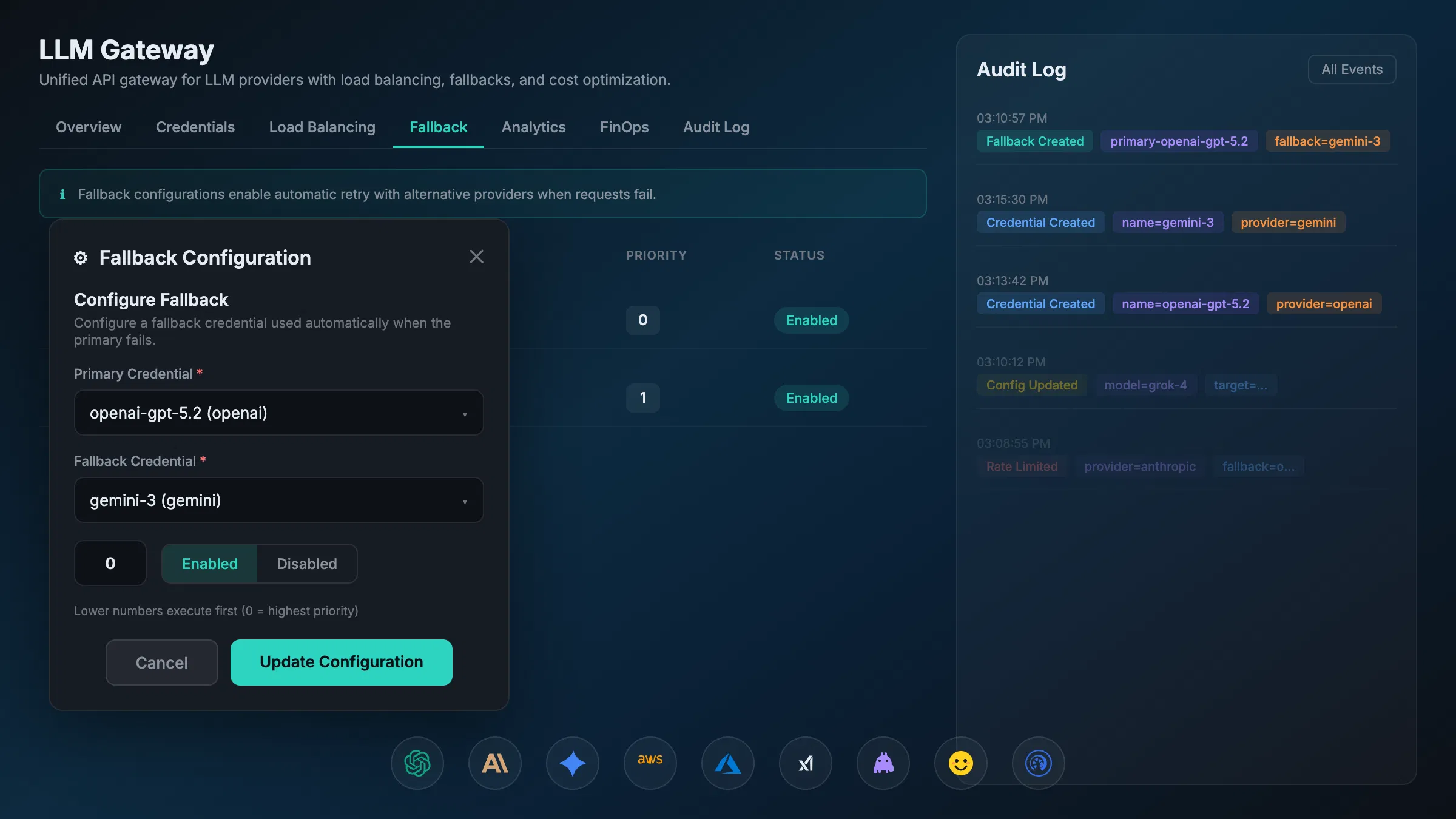
Most “vibed” applications lack AI observability. They don’t report on latency, they don’t track token cost per user, and they certainly don’t have fallback logic. If a primary model goes down or its API structure changes, a vibecoded application simply breaks.
Runaway Costs
Without AI FinOps, the efficiency gains of rapid development are wiped out by unoptimized execution. An enterprise needs to see every call, every cost, and every failure point.
Enterprise leadership needs to ask: Is the speed of vibecoding worth the lack of visibility? For a startup, maybe. For a company managing millions in revenue, the answer is a definitive no.
From Vibes to Verifiable: Introducing VibeFlow
At AXIOM Studio, we recognize that the creative energy of vibecoding is valuable. It drives innovation. But that energy must be channeled into a framework that supports enterprise demands. This is why we developed VibeFlow.
VibeFlow is the bridge between the fluid world of AI-assisted coding and the rigid requirements of enterprise operations. It transforms “vibes” into verifiable execution by enforcing governance at the infrastructure level.
How Verifiable Governance Works
Instead of letting AI code run wild, VibeFlow ensures that every AI interaction is routed through a secure, governed environment. It provides:
- Automated Audit Logging: Every prompt, every response, and every code execution is recorded.
- Policy Enforcement: You can set global rules on model usage, data handling, and cost limits.
- Architectural Guardrails: Using the Model Context Protocol, VibeFlow ensures that AI agents have the right context without overstepping security boundaries.

Architecting for Control: The Gateway Strategy
To truly eliminate the risks of vibecoding, enterprises must implement a gateway-first architecture. This isn’t about slowing down developers; it’s about providing them with a safe environment to build.
- LLM Gateway: Centralizes all model access. This allows for instant switching between providers (OpenAI, Anthropic, Gemini) without rewriting “vibed” code.
- A2A Gateway: Manages agent-to-agent communication, ensuring that autonomous AI systems don’t create feedback loops that drain resources.
- MCP Gateway: Provides a standardized way for AI tools to interact with your data, preventing the “hallucination-led data breach” scenario.
By routing vibecoding through these gateways, you gain the visibility required for AI security and operational excellence.
The Path Forward for Enterprise Leadership
The hype around vibecoding will settle. What will remain is the need for robust, scalable AI systems. Leaders must decide now whether they want their organization to be a collection of unmanaged experiments or a unified AI-powered engine.
We’ve seen this pattern in every major tech shift: from the early days of the web to the move to cloud. Speed is the initial driver, but governance is the sustainer.
Key Takeaways for Your Strategy:
- Audit your current AI footprint. Identify where “vibed” code is already leaking into production.
- Implement a centralized gateway. Stop the proliferation of Shadow AI by giving developers a better, governed alternative.
- Prioritize observability. If you can’t measure the cost and performance of your AI code, you can’t manage it.
- Shift to Verifiable AI. Use tools like VibeFlow to ensure that every AI action is compliant, secure, and documented.
Vibecoding is an incredible tool for exploration. But for execution? You need more than a vibe. You need a platform that understands the stakes of enterprise operations.

Ready to move beyond the chaos? Explore how AXIOM Studio is helping enterprises build the future of agentic AI development with control and sovereignty.
Ready to govern your vibecoded AI operations? Get started with AXIOM for free and get full visibility, compliance, and control across every AI interaction in your enterprise.
Frequently Asked Questions
What is vibecoding and why is it risky for enterprises? Vibecoding is the practice of using LLM prompts to generate code with minimal human review. While it accelerates development, it creates compliance gaps, broken audit trails, and unvetted code in production — risks that enterprise environments cannot afford.
How does vibecoding create shadow AI in organizations? Because vibecoding makes it easy to generate functional code, engineering teams spin up unmanaged microservices and integrations outside central IT oversight. This creates a fragmented ecosystem where security patches, credential management, and architecture planning are bypassed entirely.
What compliance frameworks are affected by vibecoding? Vibecoding can violate SOC 2, HIPAA, GDPR, and the EU AI Act by breaking the chain of custody for code changes, eliminating peer review documentation, and introducing unaudited data handling into production systems.
How does an LLM Gateway help control vibecoding risks? An LLM Gateway centralizes all model access, providing automated audit logging, policy enforcement, cost controls, and provider failover. It gives enterprises visibility into every AI interaction without slowing developer workflows.
How can I implement verifiable AI governance for my organization? Get started with AXIOM for free to see how our platform provides enterprise-grade AI governance with centralized visibility, automated compliance enforcement, and full audit trails across all AI operations.
Written by
AXIOM Team